Cashmere is one of the most precious natural fibres in the world. It is soft, light and warm, but the word cashmere on a label does not always tell the whole story. Fibre quality, yarn construction and finishing can vary enormously.
These simple tests will help you understand what you are touching and buying.
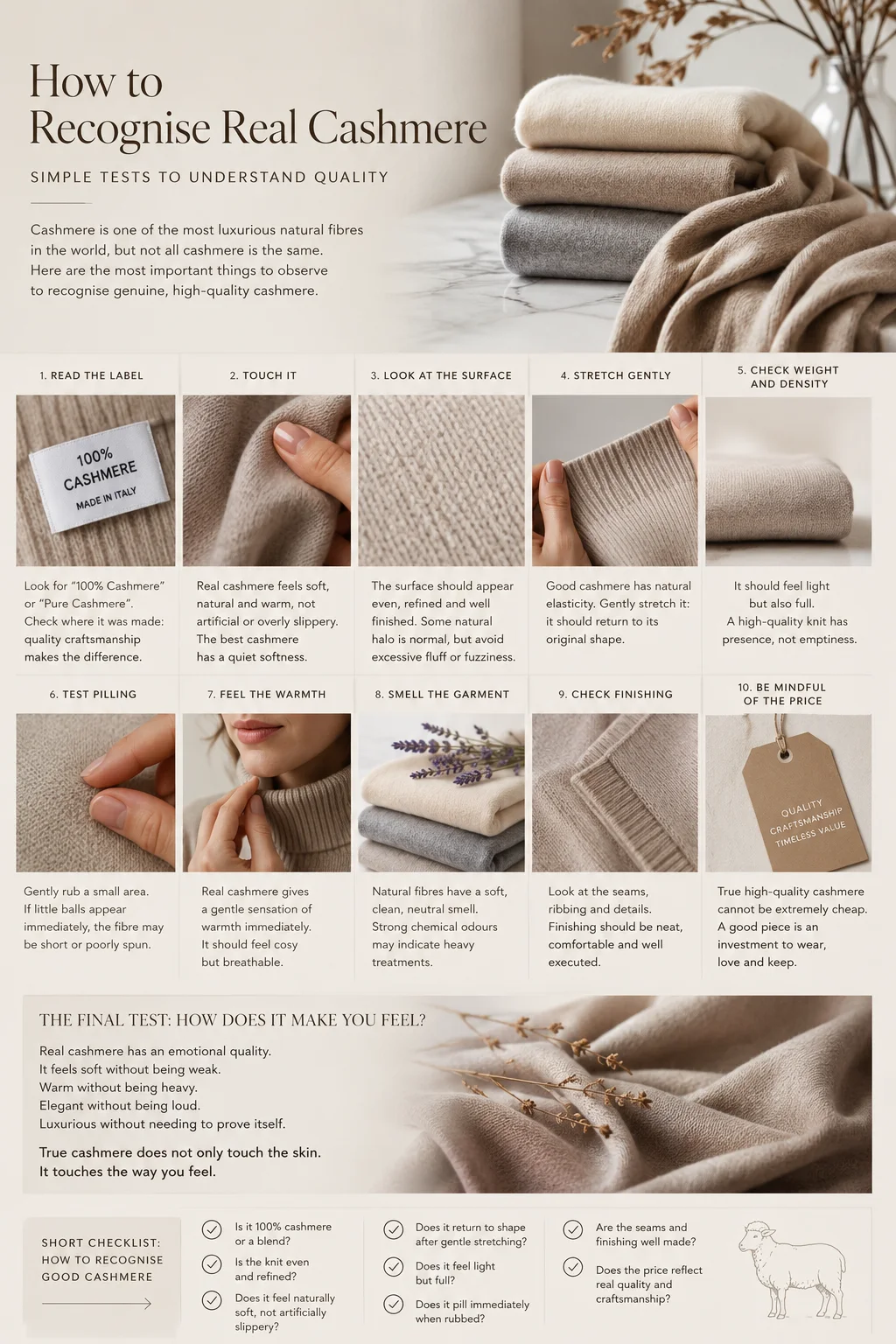
1. Read the label carefully
Begin with the composition. A garment labelled 100% cashmere should contain cashmere only. Blends can still be beautiful, but wool, silk, viscose or synthetic fibres change the feel, performance and value of the piece.
Country of manufacture matters too. It does not guarantee quality by itself, but it tells you where the fibre was transformed into yarn and where the garment was made.
2. Touch it: softness should feel refined, not slippery
Good cashmere feels soft without feeling artificially slick. It should have a dry, delicate hand and a natural warmth that develops as you hold it.
An unusually slippery surface can come from aggressive chemical softening. It may feel impressive in the shop, yet disappear after the first wash.
3. Look closely at the surface
Fine cashmere has a soft halo, but the fibres should not look excessively fluffy. A very hairy surface can indicate short fibres that have been brushed to create immediate softness.
Longer fibres make a cleaner, stronger yarn. They usually pill less and retain their beauty for longer.
4. Gently stretch the fabric
Take a small area between your fingers, stretch it lightly and release it. A well-made knit should recover its form without looking loose or distorted.
Resilience comes from the quality of the fibre, the twist of the yarn and the construction of the knit.
5. Notice weight and density
Cashmere is light, but it should not feel empty. Hold the garment up and look through it. Unless the style is intentionally sheer, a quality knit will have an even, consistent density.
A piece can be lightweight and still feel substantial because the yarn and stitches are balanced.
6. Rub it gently to check pilling
Rub a discreet area softly between two fingers. A few loose surface fibres are normal, especially on a new garment. Immediate clumps of fuzz are not.
All cashmere may pill through friction, but high-quality long fibres tend to settle after the first wears and careful washes. Short, weak fibres continue to shed.
7. Feel how it holds warmth
Place your palm against the fabric for several seconds. Real cashmere responds quickly to body heat and holds it while remaining breathable.
This rare combination of warmth and lightness is one of its most distinctive qualities.
8. Smell the fibre
Natural cashmere should have little or no strong odour. A chemical smell can signal heavy finishing treatments. When damp, an animal fibre may have a faint natural scent, but it should never smell sharply synthetic.
9. Examine seams and finishing
Quality is not only in the fibre. Look at the joins, ribbing, hems and buttonholes. Seams should lie flat, edges should be even and the knit should feel balanced on both sides.
Careful finishing takes time. It is often the clearest sign that a garment was made to last.
10. Be realistic about prices that seem too low
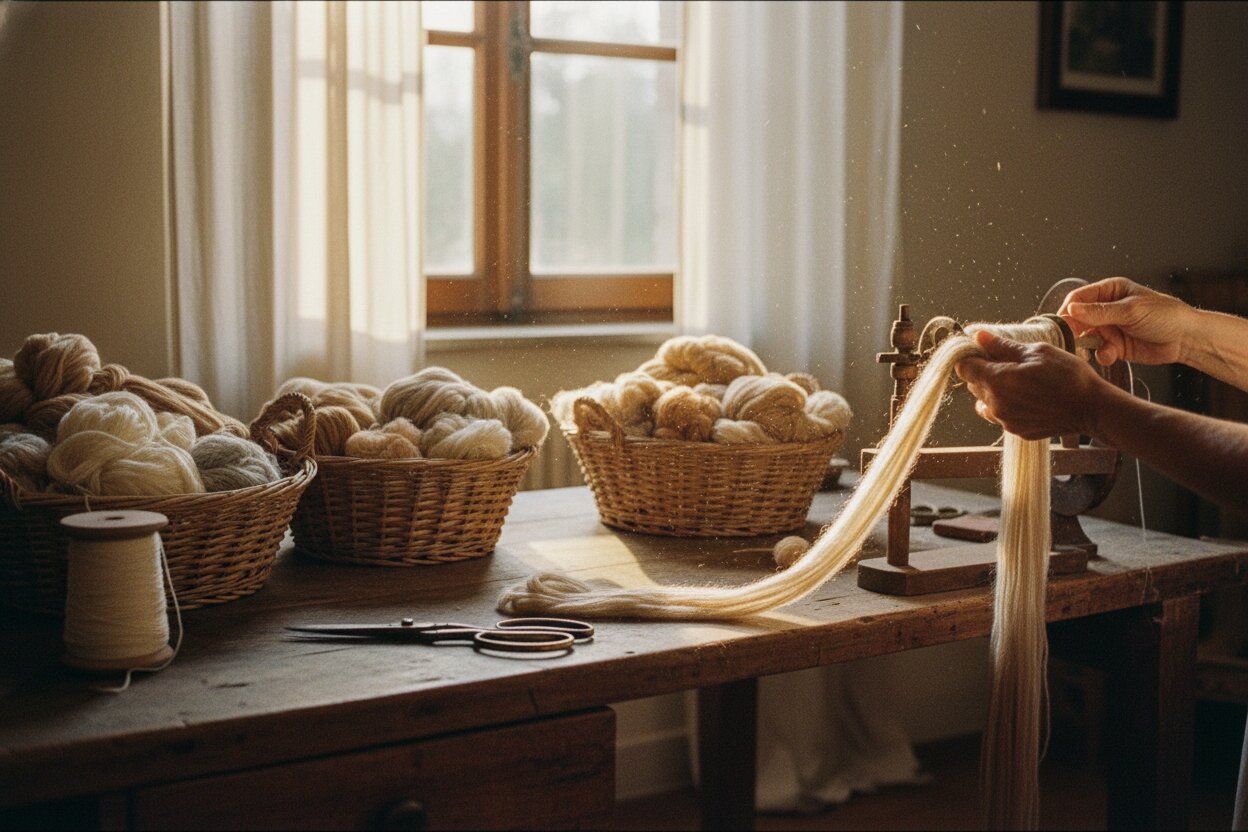
Cashmere is scarce. Each goat produces only a small amount of usable undercoat in a year, and collecting, sorting, spinning and knitting it require skilled work.
A very low price usually means a compromise: shorter fibres, a blend, a very loose construction or industrial finishing designed to imitate softness.
The final test
Wear it. Good cashmere feels quiet. It warms without weight, moves naturally with the body and becomes more personal over time. True quality is not only what you notice in the first minute; it is what remains after years of wear.
That lasting relationship is the real luxury of cashmere.