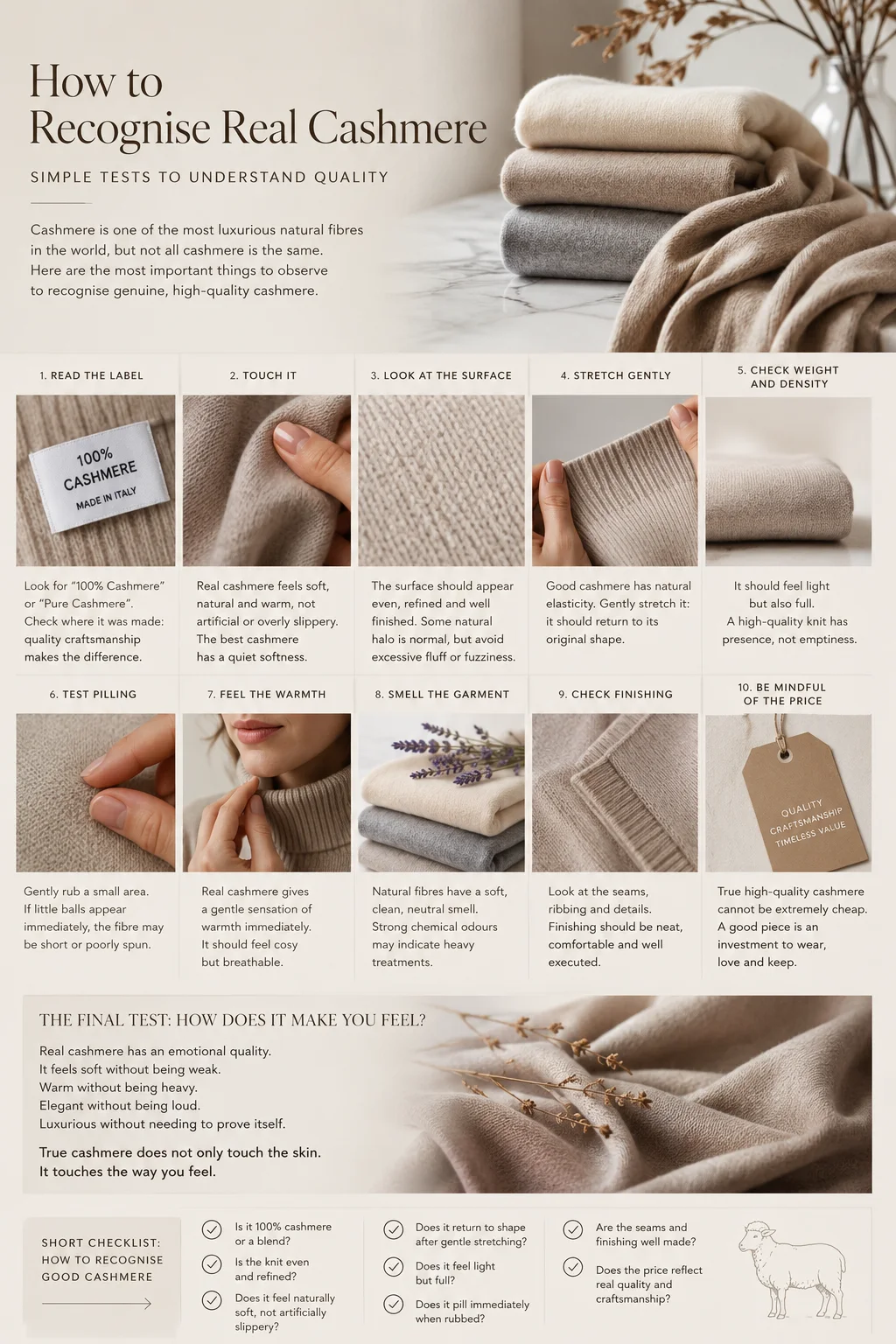
Cashmere is not a type of sheep’s wool. It is the exceptionally fine undercoat of cashmere goats, grown beneath their coarser outer hair as protection from extreme winter climates.
The fibre originates in regions including Mongolia, Inner Mongolia, China, Nepal, Iran and Central Asia. In spring, when the animals naturally shed, the precious down is collected and separated from the rougher fibres.
Each goat produces only a small quantity of usable cashmere. Its rarity begins here.
Why cashmere feels different
Cashmere fibres are extraordinarily fine. They trap warm air close to the body while remaining light and breathable. The result is warmth without heaviness, softness without bulk and comfort across changing temperatures.
But not all cashmere is equal. Fibre length, fineness, colour, origin and the way it is sorted determine the quality of the raw material. Spinning, dyeing, knitting and finishing then determine whether that potential is preserved.
Fibre origin and manufacturing origin are not the same
The goats do not live in Scotland or Italy in significant numbers. Yet both countries have important cashmere traditions because the identity of a cashmere garment is shaped by where and how the raw fibre is transformed.
Scottish cashmere is known for classic spinning, dense construction and a restrained heritage aesthetic. It has an unmistakable place in the history of fine knitwear.
Italy brings a different sensibility.
What Made in Italy adds
Italian makers do more than turn fibre into fabric. They elevate it through proportion, colour, texture and silhouette.
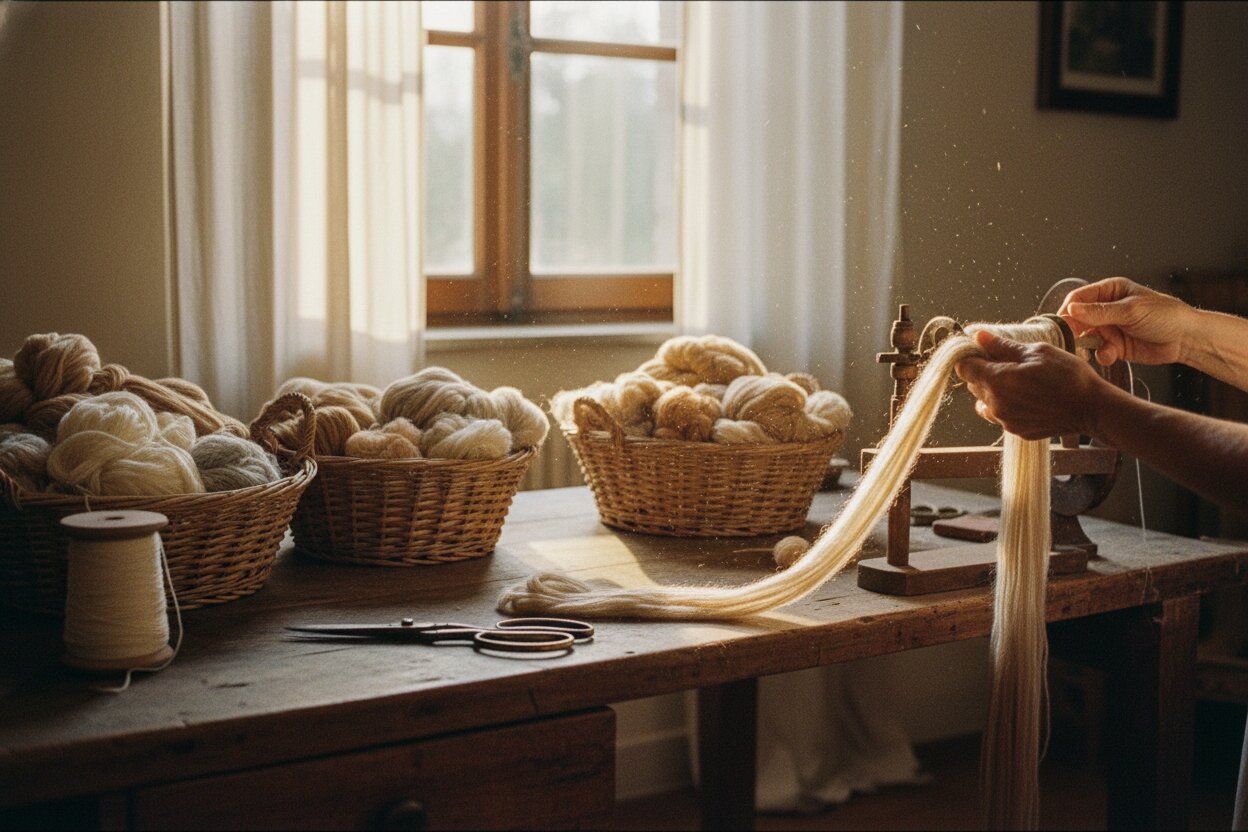
The work moves through specialist hands: fibre selection, yarn development, dyeing, knitting, linking, washing, finishing and final inspection. Each stage changes how the garment falls, how colour catches the light and how the cashmere feels against the skin.
Italian craftsmanship is technical, but it is also visual. A neckline is judged in relation to a shoulder. A sleeve is adjusted for movement. A shade is developed to sit beautifully beside the skin. The aim is not simply to produce a soft object, but to create desire.
A culture of proportion and colour
Italy’s textile districts combine generations of material knowledge with a fashion culture that is always evolving. Mills and workshops work close to designers, experimenting with yarn counts, blends, stitches and finishes.
This proximity allows cashmere to become lighter, more fluid, more sculptural or more sensual. It can be quietly classic or unmistakably contemporary without losing its integrity.
The difference is often subtle. You see it in the balance of a garment before you understand its construction.
More than a label
Made in Italy should never be treated as decoration. At its best, it describes a chain of knowledge: skilled people making careful decisions at every stage, from yarn to finished piece.
The label matters because the process matters. It represents judgement, patience and an insistence that even the details nobody sees should be right.
True luxury
Cashmere begins as one of nature’s rarest and most intelligent fibres. Italian craftsmanship gives it expression.
Not just softness. Not just warmth. Not just tradition.
A statement of refined luxury.