If you ask a French luxury house where their best knitwear is produced, the answer is almost always Italy.
This is not a secret of the industry — it is one of the least surprising sentences anyone in fashion has ever spoken. But the why is more interesting than the what, and very few people outside the workshops actually know it.
These are a few honest notes.
A country of textile districts
Italy does not produce knitwear evenly. It produces it in a small number of geographically tight districts, each with its own specialism, its own families, and its own slightly suspicious view of the others.
Three districts matter most for cashmere and fine wool knitwear:
- Prato, in Tuscany — the world’s centre for the regeneration of woollen fibres since the 1800s. If you have ever owned a recycled cashmere garment, the fibre almost certainly passed through here. (We wrote more about this in our piece on regenerated cashmere.)
- Biella, in Piedmont — historically the home of the great mills (Zegna, Loro Piana, Cerruti) and the place where the finest virgin yarns are spun.
- Solomeo, in Umbria — Brunello Cucinelli’s home village. A district that came late, but invented something distinctive: an entire luxury house built around a single hilltop town’s idea of craft.
Smaller knitwear pockets exist in Veneto (around Treviso) and Lombardy, but the heart of the country’s knitting industry lives in these three places.
Family-run, almost without exception
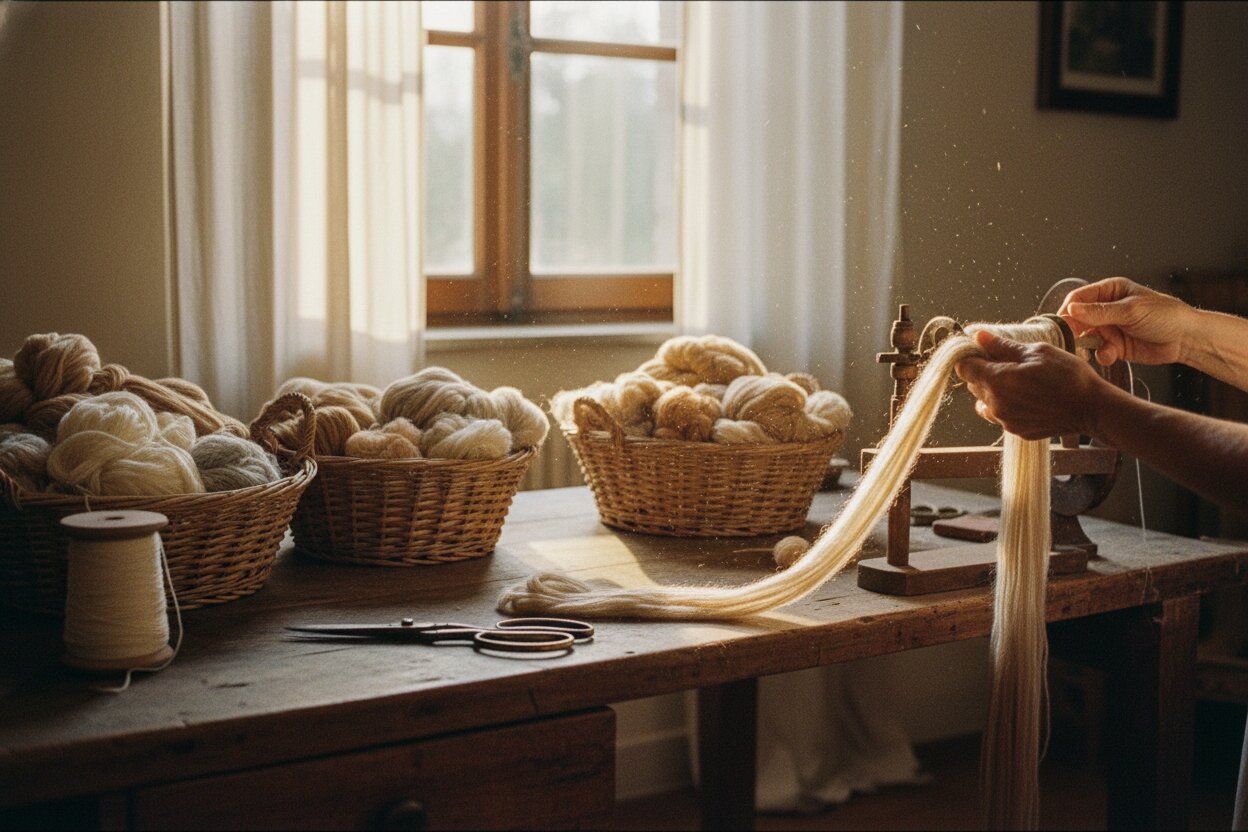
The mills and workshops of these districts are, with very few exceptions, family businesses passed down through three or four generations. This is not folklore — it is one of the structural reasons Italian knitwear remains so good.
A family-run workshop has a different relationship with time than a public corporation.
- They will spend a year solving a problem with a single shoulder seam.
- They will keep an unprofitable machine running for forty years because it produces a stitch no other machine can replicate.
- They will refuse to scale, because scaling would mean explaining to their grandfather why they ruined the yarn.
This is not romance. It is the organisational structure that produces the texture of an Italian knit.
What you can actually feel in a piece of Italian knitwear
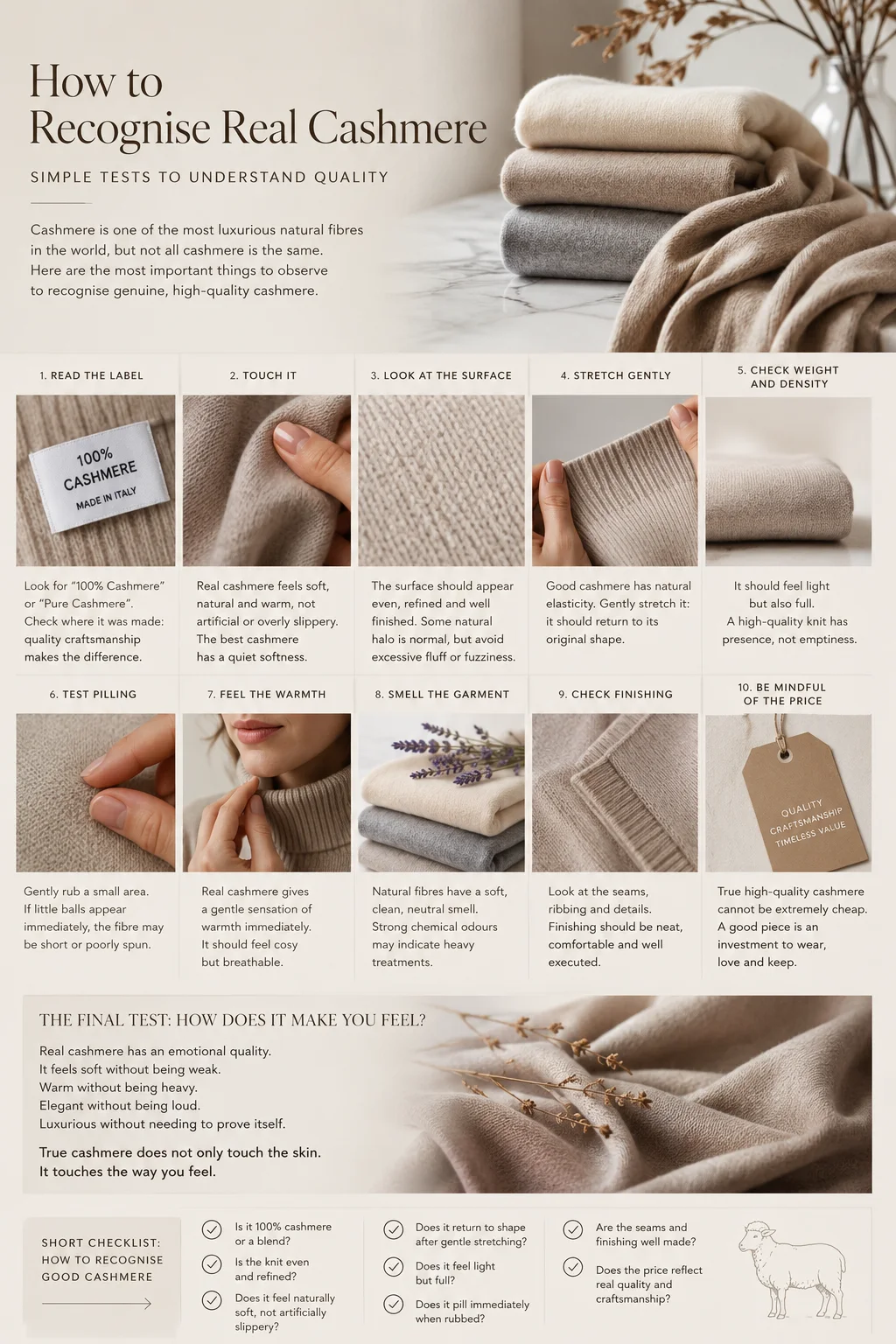
When people speak of “Made in Italy” knitwear, they are often gesturing at a feeling they cannot quite name. There are a few specific things to look for:
The hand. The drape of a well-made Italian knit is unhurried. The yarn has not been over-twisted to save time, and the gauge is appropriate to the fibre. You can feel this in the way the fabric moves around the shoulder.
The collar. Italian mills are famously fussy about how a collar sits. They will rib it, fold it, and steam it back into shape repeatedly until it falls correctly. This is one of the easiest ways to spot a cheap knit, no matter what label is on it.
The seams. Italian knits are typically linked at the shoulders and underarms, not overlocked — a slower, more expensive technique that produces a seam you cannot feel against the skin.
The yarn count. Italian mills work to a finer gauge, with longer staple fibres. The result is a knit that is lighter and warmer than its weight suggests.
You cannot see these things in a photograph. You can only feel them once the garment is on.
The smaller houses
The famous Italian knitwear names — Loro Piana, Brunello Cucinelli, Cruciani — are now substantial companies, often part of larger luxury groups. They produce extraordinary clothing.
But a quieter category exists alongside them: smaller Italian houses, often family-led, that work with the same mills and the same artisans. These are the brands most readers will never have heard of, because they sell mostly to selected boutiques and a small list of clients who have learned about them by word of mouth.
These houses produce some of the finest knitwear in the world. They cannot scale, because their workshops cannot scale. Their pieces are limited. Their prices, often, are surprisingly approachable — because they are not paying for global advertising.
ValeriaVH is one of these houses. We work with a single Prato mill for our regenerated cashmere, and our pieces are knitted in workshops that have been operating, in some cases, since before either of us was born.
It is a slow way to build a brand. We are not in a hurry.
How to buy Italian knitwear well
A few quiet rules we believe in:
- Read the label. Made in Italy is legally protected. Designed in Italy or Italian style is not.
- Touch the collar first. It tells you almost everything.
- Ask where the yarn is spun. A serious brand will know. A serious brand will be pleased you asked.
- Buy fewer pieces. A single Italian cashmere knit, well cared for, will outlive five fast-fashion sweaters and cost less per winter than any of them.
This last one matters most.
Reading further
If you would like to see the Italian craft we work with directly, our page on The Reborn Cashmere walks through our material in detail, and the Private Edit is the simplest way to feel a Made-in-Italy knit in your hands.
A good knit is an Italian noun.